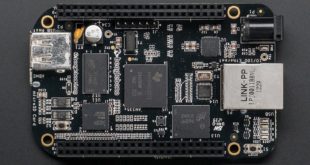
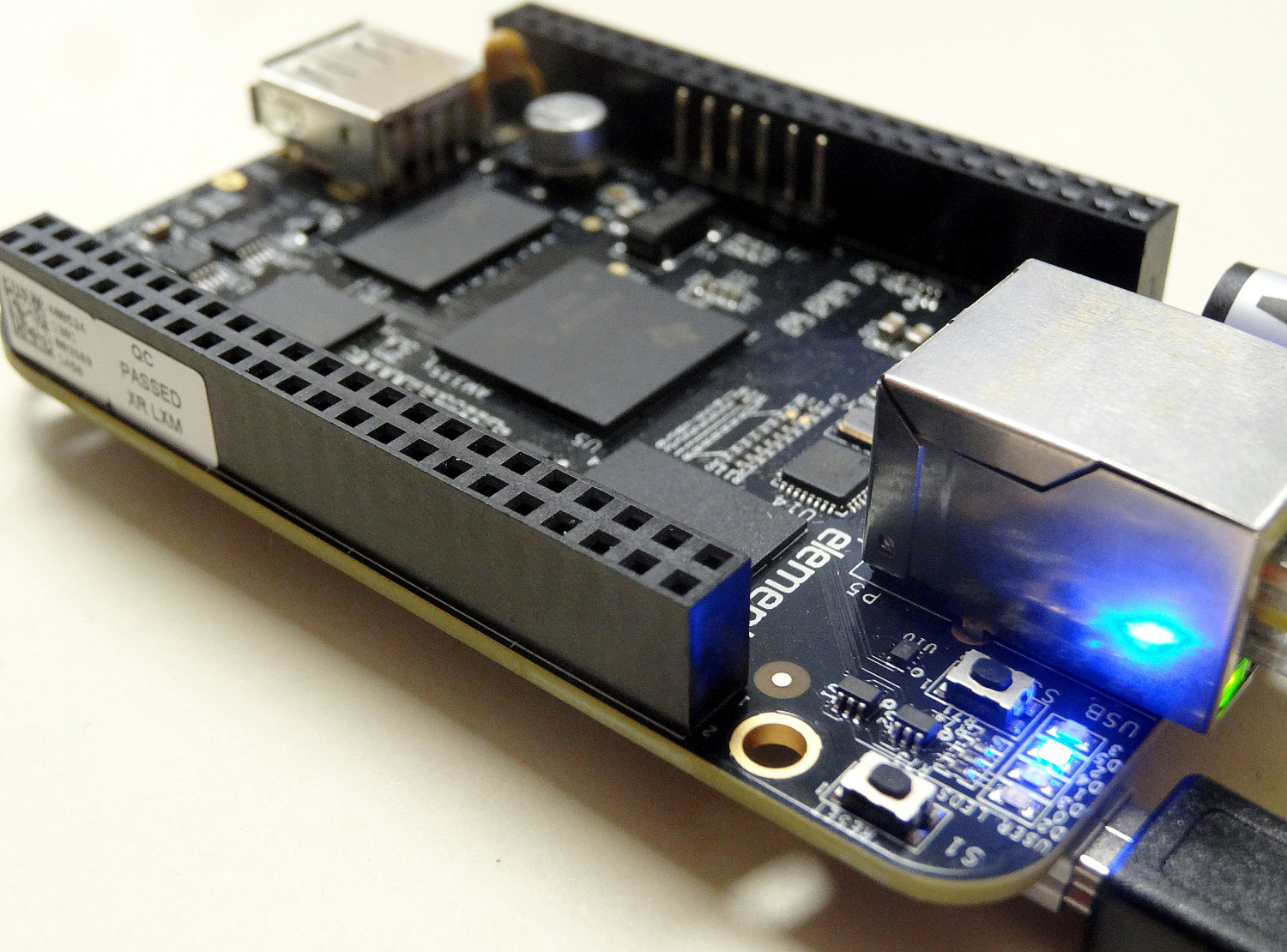
Ah, the Beaglebone Black. This credit card-sized computer was meant to be the Raspberry Pi’s competitor and sure lives up to it. Its users are way less than RPi’s, which is understandable, given the Pi’s appeal to beginners and the like. But if you would ask me what to choose …
Read More »Beaglebone Black MPU6050 Interfacing: I2C Tutorial Part 2
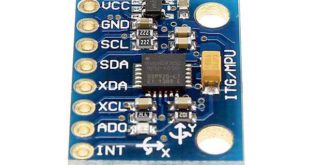
We covered the Beaglebone Black I2C basics in our last tutorial. This time, we'll try to communicate with a device through the I2C protocol. This device, the MPU6050, is a gyroscope + accelerometer integrated circuit that is very popular among makers and enthusiasts.
Read More »Beaglebone Black I2C Tutorial
I2C is a popular communications protocol and is used by a lot of sensors and devices. This is why most microcontrollers, including Arduino, PICs, and STM32 have I2C support. In this tutorial, we will look at how to use the I2C protocol on the BBB and create a simple Beaglebone …
Read More »Beaglebone Black Serial Connection to Arduino
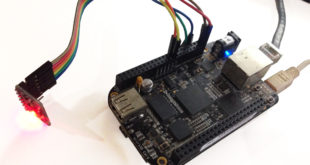
One way to connect a microcontroller to another microcontroller is through the serial port. Here I will show you how to use the Beaglebone Black serial port to connect to the Arduino UNO.
Read More »Beaglebone Black ADC: Reading Analog Voltages
One of the most important things your microcontroller can do is read analog voltages. It is important particularly in interfacing with sensors where most throw varying voltage levels that represent varying physical quantities (temperature, pressure, etc.). Microcontrollers, including the Beaglebone Black, have analog to digital converters to do this. Here …
Read More »Beaglebone Black PWM on Ubuntu 16.04 Using Device Tree Overlay
Now we'll use the Beaglebone Black PWM to control a servo motor. PWM, which is short for pulse width modulation, is widely used for controlling motors (dc and servomotors). PWM is also used in controlling power delivered to a load or device without using "power-eating" rheostat.
Read More »Beaglebone Black: Controlling On-board LEDs
In this post, I flashed a LED connected to one of the Beaglebone Black's GPIO pins. Here I will flash the user or on-board LEDs on the device using the same method we did on the external LED.
Read More »Beaglebone Black Blink LED using C++
The first thing I did when I had my Beaglebone Black (BBB) was toy with it using C++. The "hello world" of embedded programming is LED blinking so that's what I did. Note that the BBB has user-accessible on-board LEDs and controlling them is very similar to the method outlined here. …
Read More »