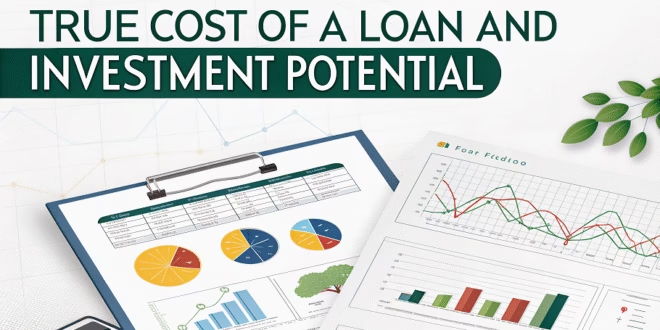
You need a loan to make a big buy, but you also want to get rich in the long run. It's an old story (or the history of money). When you want to buy a new car, your first home, or start a business, borrowing money is a big step. The other side of this coin is hearing about people whose investments grow by magic. How do you do it? It's math, not magic. Do not fear, it is not a scary kind! The first thing you need to do to take charge of your financial future is learn how to figure out the real cost of debt and the real possibility of your investments. Let's take it apart.
Unmasking the True Cost of a Loan
When looking for a loan, people prioritise monthly payments because that's how much they can say, "I can afford it." However, the weekly payment would only be taken into account for a quick look. The interest and time are the main parts of the cost that make it real. Interest rates are the percentages that lenders charge for letting people take their money. "For so little," we'd say, but over time, it adds up to a huge amount. Any interest rate calculator will really blow your mind when you see how a 1% difference can save you a lot of money over the life of the loan.
The loan's term tells you how long you have to pay it back. If you take out a long-term loan, the monthly payment might be low. This can seem like a benefit, but it actually means you'll pay more in interest over the life of the loan. An auto loan calculator can help you see how much more the five-year loan for the same car costs than the three-year loan. Let's say you want to buy a car. When you see how much interest you are going to pay, you'll probably be forced to make a smart financial move.
The Magic of Compounding: Your Investment Superpower
Now let's move on from talking about how much debt costs to talking about how much growth there is. Every great investor has a secret weapon that they use all the time: compound interest. Einstein is said to have called it the eighth wonder of the world, and he may have had a good reason for that! So that we can all understand, compounding is when interest is earned on both the original investment and the interest that has been earned over time. It's like a snowball going downhill: it starts out small but quickly gets bigger and faster as it picks up more snow.
This is the point where your money earns you money. Let's say you start with $1,000. It will give you $1,070 if it earns 7% a year. In the second year, your 7% profit will be based on $1,070 instead of the $1,000 you put in the first year. At first glance, that difference might not seem important, but over decades, it becomes very important. The second reason investing at any age is so strong is that it helps you avoid having to work. Time has the most significant effect on compound interest. A great way to understand this is to use a compound interest calculator. You can put in any number—your starting amount, your monthly payment, or the rate of return you expect—to see how your savings can grow into a big nest egg for retirement or other long-term goals.
Tying It All Together: Opportunity Cost is Key
That being said, how do loans and investments fit together? Opportunity cost is the idea that connects the two. When you pay off a loan with a high interest rate, you lose the opportunity to earn compound interest on that dollar. From this point of view, paying off a credit card with an 18% APR is the same thing as getting an 18% return on your money. You would have a hard time finding another investment that is so safe and pays off so quickly.
In this standard money situation, you have to decide whether to invest the money or aggressively go after your debt. Most of the time, it's a study of numbers. Is the interest rate on your loan higher than what you can earn from investments? If so, you should get rid of the debt first. When you get rid of your high-interest bills, you can invest your cash flow. This will make the money grow for you instead of against you.
Your Financial Journey Starts Now
You don't have to be a math genius to figure out loan rates and business opportunities. You just need to know how to use numbers. You could be a rich saver if you know more than just your monthly payments. You need to know how APR and loan terms work. If you're interested in compound interest, you can slowly melt your way into financial comfort. These two things come together to form personal finance. If you can master both, you'll be able to steer your finances well.