Home / Roland Pelayo (page 47)

Roland Pelayo

I started TMM back in 2015. I’m a firmware and embedded systems engineer with over ten years of experience designing and developing electronic and microcontroller-based products. Over the years, I’ve worked on a wide range of projects, including medical devices, access control and security systems, automation, robotics, wireless communication modules, IoT systems, imaging and sensor instruments, and educational training tools. I’ve built systems using platforms such as PIC, AVR, ESP32, STM32, nRF52, and Raspberry Pi, and I regularly work with protocols like RS485/OSDP, CAN, TCP/IP, Wiegand, and a variety of sensor and communication interfaces. I also develop full-stack solutions for embedded projects, combining firmware, hardware, and web-based dashboards when needed. If there’s a topic you’d like me to write about, or if you need consultation or hands-on development for electronics, embedded, or firmware projects, I’m always open to working on new ideas and collaborations. You can reach me anytime through the contact page.

Arduino Sensor Interfacing Tutorial

arduino sensor example

A sensor is a device that transforms physical quantities like temperature, humidity, pressure, etc., to an electrical signal. Moreover, this signal is often fed to a microcontroller like the Arduino for further processing, displaying or recording. This data from the sensor are often analog in nature, i.e., they vary over …

Read More »

PIC16 I2C Tutorial

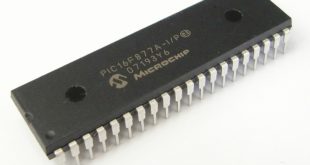
PIC16F877A

To continue with our tutorial on synchronous serial with PICs, we will know look at I2C, another popular protocol used by sensors, displays and memory devices.

Read More »

PIC16 SPI Tutorial

PIC16F877A

Simply put, synchronous serial protocols like SPI and I2C have a separate line for timing (the CLK line) while asynchronous protocols like UART (RS232) don’t. The addition of a clock line makes reception timing much easier and thus reduces transmission errors. It is also possible to interconnect more than two …

Read More »

Serial (USART) Communication with PIC16F877A

PIC16F877A

PIC microcontrollers, obviously, can do more than just light up LEDs or reading button states. Microcontrollers can also communicate with another microcontroller or with other devices like sensors, memory cards, etc. Often the communication is done serially, where data bits are sent one at a time. The microcontroller serial communication …

Read More »

Using SIM800L with Arduino

Arduino SIM800L Tutorial

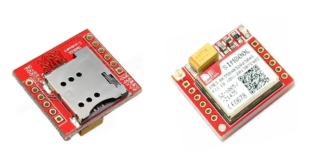
The SIM800L is a small, low-cost GSM/GPRS module (2G) with most of the features of larger SIM900 shields. In this Arduino SIM800L tutorial, you’ll wire the module safely, send/receive SMS, and make HTTP requests over GPRS — plus fix the most common power and network issues.

Read More »

Arduino Nokia 3310 LCD Interfacing

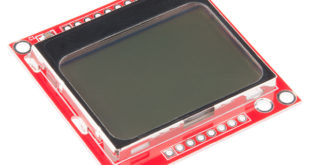
Displays are almost always a part of any microcontroller project or embedded system. Fortunately, there are cheap LCDs available with a wide support for multiple microcontroller devices. One is the PCD8544-based liquid crystal display, more popularly known as the Nokia 5110/3310 LCD. This Arduino Nokia 3310 LCD interfacing article covers …

Read More »

Input/Output with PIC Microcontrollers

For most microcontrollers, the input and output channels are handled by data direction special function registers. AVR microcontrollers call them Data Direction Registers (DDR) while ARM-based STM32 has a group of “GPIO” registers. PICs call them TRIS registers which is supposed to be short for “TRIState”. In this article, we …

Read More »

Arduino NRF24L01 Interfacing Tutorial

NRF24L01 Lower Power

If you are looking to have wireless features on your next project and don't want to spend that much, then an Arduino NRF24L01 solution might be for you. The NRF24L01 by Nordic Semiconductors contains a 2.4 GHz RF transceiver, synthesizer and baseband logic which can be interfaced through SPI. Apparently, …

Read More »

An Arduino LED Control Tutorial

arduino rgb led tutorial

The “hello world” of microcontroller programming is flashing an LED. As an introduction to Arduino programming, we’ll code several simple Arduino LED sketches; we’ll be blinking an LED, make an LED respond to an input and fade an LED. I’ll also show you how to easily manipulate multiple LEDs and …

Read More »

Connecting a Servo Motor to An Arduino

Arduino Servo MG996R

Building robots with Arduino starts with knowing how to move objects through motors. There are a lot of types of motors used in microcontroller-based systems: DC motors, stepper motors, and servo motors.  In this Arduino servo motor article, I will discuss what is a servo motor and how to use …

Read More »