Home / Tutorials (page 5)

Tutorials

ESP8266 nRF24L01 Interfacing

ESP8266 nRF24L01

In this tutorial, we will explore how to interface an ESP8266 with the nRF24L01 wireless module. The nRF24L01 is a low-power, 2.4GHz wireless transceiver module that is commonly used in short-range wireless communication. It communicates over SPI, while the ESP8266 is a Wi-Fi-enabled microcontroller that can be programmed using the …

Read More »

Arduino Interfacing with MLX90614 (GY-906) Sensor

Arduino MLX90614

The MLX90614 is a really cool infrared thermometer sensor that can measure temperature without even touching an object. It works by detecting infrared radiation (heat) emitted by an object and converting it into a temperature reading. This makes it perfect for projects where you want to measure temperature from a …

Read More »

Multitask with ESP32 and FreeRTOS

Consider a project requirement, where you have to read from an analog sensor, update a display and flash an LED simultaneously. This might be a challenging coding assignment if you haven’t heard of an RTOS before.  RTOS allows you to process multiple “tasks” concurrently. This is in contrast with a …

Read More »

Using BLE with ESP32 on the Arduino

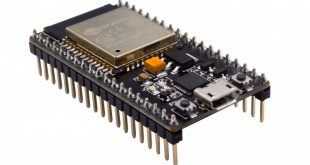
ESP32 NodeMCU-32S

The ESP32 microcontroller is a powerful and versatile platform, widely used in IoT applications due to its built-in Wi-Fi and Bluetooth capabilities. One of its standout features is support for Bluetooth Low Energy (BLE), which is an energy-efficient version of Bluetooth designed for IoT devices, wearable tech, smart home gadgets, …

Read More »

How to Set Up LwIP Raw on STM32F407

LwIP (Lightweight IP) is a small TCP/IP stack used in embedded systems like STM32. It helps devices communicate over networks using internet protocols. In this post, I will show how to set up LwIP in "raw" mode for an STM32F407 microcontroller. What is LwIP Raw Mode? In raw mode, LwIP …

Read More »

Using Flash Data Storage (FDS) in the nRF52832

The nRF52832 is a versatile SoC (System on Chip) from Nordic Semiconductor that supports various features, including Flash Data Storage (FDS) for non-volatile data management. This post gives some basic examples of how to use FDS to save, delete, and update data, as well as how garbage collection works to …

Read More »

Implementing PID for a Line Follower Robot

  A PID controller is a must-have for any control system aiming for stability. I’ve introduced how to implement PID using an Arduino microcontroller. Now, I’ll be applying PID in the design of a beginner robot project, a line follower. A line follower does what it’s named after. An optical …

Read More »
Index