According to a joint study by GlobalSpec and TREW Marketing, 79% of buyers consider datasheets the most valuable type of content when making a purchasing decision. For a manufacturing website, this is an important indicator: potential customers need more than a product photo and its name. What other essential elements should a product page include to remain an effective part of the website and sales process? We explore this in the article.
What functions does a product page serve?
A product page on a manufacturing website https://www.yelk.io/industry/manufacturing/ serves several purposes. First and foremost, it provides detailed information about a specific product while also creating a clear next step in the interaction with the company, whether that means requesting a consultation, scheduling a call, or placing an order directly. The page should therefore do more than describe the product. It should answer the main questions a potential customer may have before contacting the company.
Product pages also have an SEO function. A dedicated product page gives search engines a specific, relevant piece of content focused on a particular product, its characteristics, and its applications. For manufacturers with a broad product range, this also creates an opportunity to target more relevant search queries than a single general catalog page can.
Key Elements of a Product Page
All product page elements can generally be divided into two categories: visual and technical. Each should address part of the user's query and, ultimately, minimize the number of questions a potential customer needs to ask: what is the product for, what is it made of, what does it look like, and how can it be purchased?
Visual Elements
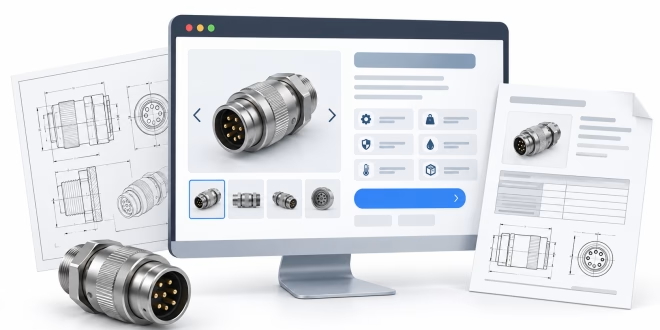
The main section of a product page should include the product name and, where necessary, several key details such as the series, type, or part number. For customers who are already familiar with the product range and know exactly what they are looking for, this information may be enough to identify the right product. However, when visitors are comparing several products and trying to understand the differences between them, a product name alone is not enough. High-quality photos or video overviews can provide a clearer understanding of the product. For complex systems and machinery, it can be useful to include photos from different angles or a short video showing the product during installation or operation.
Another essential visual element is a button or other clear call to action that allows the user to move to the next step. This could be Request a Quote, Buy Now, Schedule a Call, or another option that matches the company's sales process. Whatever the specific action, users should not have to search other pages to find out how to contact the manufacturer or speak to a sales representative.
Technical Elements
Depending on the type of product, this section should include dimensions, power, capacity, weight, operating conditions, composition, and other relevant parameters. It is also worth specifying the material, available modifications, and configuration options, where applicable. For products available in several configurations, this information is particularly important because it helps users understand the differences between models and determine which option is suitable for their specific needs. If the product has certifications, compliance standards, instructions, datasheets, technical drawings, or other documentation, these should also be available on the product page or provided as downloadable files.