You have a good product idea, a working prototype, and investors are now calling back. The tricky part for many hardware entrepreneurs and product teams is actually creating it on schedule, on budget and at scale.
One path that continues to arise in these discussions is the idea of teaming up with a turnkey manufacturer. At its face it seems like a great idea to pass off the complexity and concentrate on your product. However, is it right for your project? It depends on a few considerations that should be frankly considered.
What “Turnkey” Actually Means in Manufacturing
It's a term that is bandied around a lot and it helps to be precise. A turnkey manufacturing partner will take care of the complete manufacturing process starting from:
- Sourcing the components
- Managing the assembly process
- Quality testing
- Packaging and logistics (in many instances)
You give them a design and a purchase order. They deliver you a product that is ready to ship.
Compare that to the more disorganized method of buying components on your own, relying on your own PCB manufacturing company, arranging box assembly on your own, and putting it all together yourself. That model provides you some control, however it additionally provides you a headache and typically delays.
Turnkey works best with a fairly well defined scope and a fairly well developed design. If you're still doing lots of hardware iterations, it might be too early. However, the equation becomes different when you're taking steps towards production.
The Real Advantages (Beyond Just “Less Hassle”)
The turnkey convenience is obvious, but the benefits go beyond this.
Supply Chain Leverage
Established turnkey partners have existing relationships with component suppliers. They have access to parts that you don't, such as microcontrollers, sensors, connectors, and more. This is important in markets where the lead time can be up to several months.
Cost Visibility
When dealing with only one partner, one quote will include a lot of your production expenses. This makes budgeting easier and eliminates the element of surprise that a part vendor, you weren't as attentive on, raised a price.
Accountability
In a disjointed supply chain, when things go wrong, it can be a project in its own right to determine who is responsible. A turnkey partner means that responsibility is centralised. If a batch has a defect, there is one conversation that needs to occur.
The Challenges of Hardware Manufacturing
The not-so-obvious thing about building hardware for the first time is that complexity in electronics manufacturing is not uniform. It is concentrated on a few main areas.
One of these is interconnects. Wiring harnesses that traverse through your product to power, signal, sensor, and control are expensive and surprisingly prone to error. Intermittent failures can actually be very painful to troubleshoot in the field due to poor harness. A good turnkey partner will have experience in building these to spec, and will be able to catch problems prior to shipping.
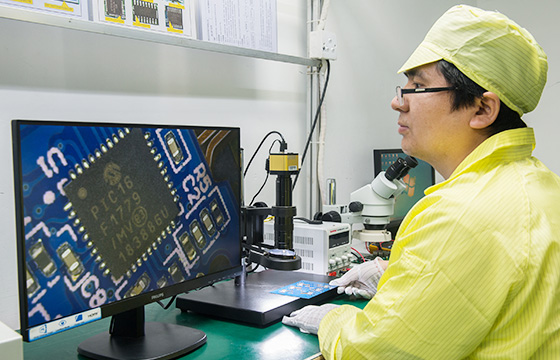
One area of complication is the board itself. Soldering quality, components placement accuracy and automated optical inspection are particularly critical to the PCB assembly process. A difference between a vendor that views this as a commodity, and one that takes it seriously is manifested in your defect rates.
It is also the reason that some companies go out of their way to seek out manufacturing partners in areas that are known to be the strongholds of electronics manufacturing. For instance, businesses that source PCB assembly Romania have been able to discover that when it comes to sourcing to Europe, Eastern European manufacturers have been providing solid technical expertise, in addition to competitive price and lead times.
Geographic Considerations Matter More Than You Think
It is no longer only a cost issue, but a risk and agility issue where your manufacturing takes place.
Many product teams have had to give concentration risk more careful consideration in recent years as a result of global supply chain disruptions. If your whole production process takes place in one region, and a port is delayed, a regulation changes or a part is unavailable, your whole business comes to a standstill.
Some companies are reacting by diversifying their manufacturing bases:
- Regional Specialization: Other areas, such as the Baltics, have become viable precision electronics alternatives.
- Regulatory Adherence: For companies looking for production in the EU with high quality standards, for example, PCB manufacturing Lithuania has become a real hotspot, especially when it comes to selling to regulated industries where the traceability of components and adherence to regional standards are crucial.
- Iteration Speed: This is also a function of how close you are to your end market. When a design change arises (and it will), it is nice to be able to fly out and see a facility in a few hours, not a few time zones, and get a chance to review and approve changes.
What a Full Turnkey Engagement Actually Looks Like

In the case of more complex products, turnkey manufacturing can include what the industry calls Box Build Assembly the complete system-level integration of all subcomponents to make a complete and tested product. This includes:
- PCBs and cables
- Mechanical enclosures
- Firmware loading
- Functional testing
- Packaging (all in one location and under one contract)
In order to achieve this level of integration, a partner is needed that understands not only particular components, but how everything functions. Their engineers must comprehend your product's end use, rather than the individual components. This is not the type of relationship that the typical contract manufacturer has with you, where you send them your gerber files and they use a pick and place machine to manufacture your products.
Red Flags: It May Not Be the Right Fit
Not every turnkey is necessarily good. There are times when it is not the right decision.
- Low Volumes: Many turnkey partners may not be interested, or the economics may not work, if your volumes are very low, say, below a few hundred units.
- Constant Design Changes: When the design changes often (as is usual during the initial phases of a product), a high number of engineering change orders can be costly and time-consuming.
- IP Sensitivity: When you give your entire design to one outside partner, you're placing a degree of trust. It is important to ensure that a partner's practices with IP, their NDA policies, and their history with other clients, is important – particularly if your product involves new technology.
Making the Decision
The truth is turnkey manufacturing is a good choice for technology projects that have moved past the prototyping phase, are approaching real volume and are willing to commit to a "partner" relationship rather than simply a transaction.
Carefully qualify your partner (visit the facility if possible, ask for references and know in which part of the process they can bring most value to the table). When it comes to finding the right fit, it can really reshape your journey to market. The incorrect one can cause difficulties which are costly to untangle.
Hardware is hard. You don't have to do everything by yourself though.