This guide is for engineers and hobbyists who prototype or rework PCBs at the bench. It covers choosing a temporary mask for the heat it will see, sealing its edges, and peeling it off cleanly. A nearby part that has to stay cool needs a heat shield, which is a separate job.
Masking is different from heat shielding
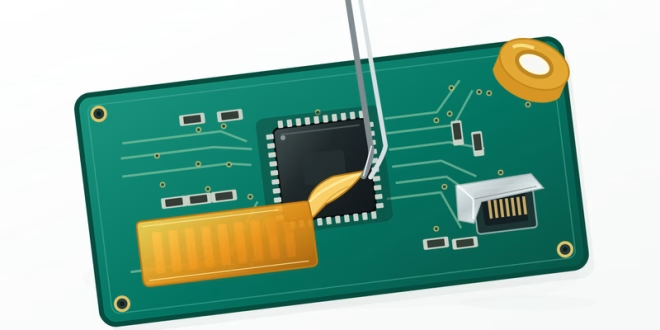
You aim hot air at a QFN with a plastic connector right beside it. Flux or stray solder can reach the contacts, and heat can damage the connector body. Tape can cover the contacts, but it does very little about the heat.
In a Circuits Assembly rework study, polyimide tape was the least effective heat shield tested. Ceramic fiber, copper foil tape, and stainless steel all performed better. The clay-and-water gel performed best in that test, but the authors said its material compatibility and ionic residue remained unverified for electronics manufacturing. Wettermann's 2015 follow-up in SMT Magazine called for further tests of ionic cleanliness, surface insulation resistance (SIR), and reliability.
For a heat-sensitive part, fit a metal shield or folded aluminum foil between it and the hot-air stream. Keep the metal clear of exposed pads and leads. A Circuitnet contributor describes shaping foil around the part and using a thermocouple to check its temperature when needed. Heat also travels through the board. Tape is still useful here, for holding a separate shield in place.
Choose the material for the actual heat cycle
For reflow, start with polyimide tape whose datasheet lists that use. For each candidate, compare its listed processes, peak temperature, and exposure time with your measured board profile. Check the backing, adhesive, and removal instructions. Run the actual cycle on a scrap board with a similar finish before masking the working board.
During hot-air rework, polyimide tape can keep flux spray off contacts outside the nozzle's main heating zone. During hand soldering, it can cover nearby contacts away from the iron. Polyester (PET) tape with silicone adhesive is generally rated for lower temperatures than polyimide tape, so use it only in low-heat areas, well away from the iron and the main heating zone, during hand soldering or localized rework. Try it on a scrap board first, and skip it for reflow.
Pre-cut polyimide dots can cover small, flat test points or holes. If tape leaves a gap around an irregular outline or through-hole, consider a peelable liquid mask. Choose one whose datasheet lists your soldering process. Some masks are made for brief wave soldering exposure, and a long reflow cycle can make them brittle. Apply a continuous bead at the specified thickness and let it cure as directed.
Ordinary paper painter's tape isn't rated for soldering temperatures. Use a specialty paper tape at soldering temperatures only if its datasheet explicitly covers the process. A rating for industrial bake cycles isn't enough on its own.
Apply it with a continuous edge
Clean the area where the tape will sit with a cleaner compatible with the assembled parts, then let it dry. Flux under an edge can prevent an even seal.
Cut a piece that extends onto sound solder mask and lies flat around tall parts. Press from the center outward, then run a clean, nonmetallic tool or gloved fingertip along the edge. Look closely beside vias and component shoulders. A corner can look flat from above and still leave a gap for flux. Shine a light across the board to spot it. Replace a creased strip before heating. If it still won't lie flat, reshape it or use a suitable liquid mask.
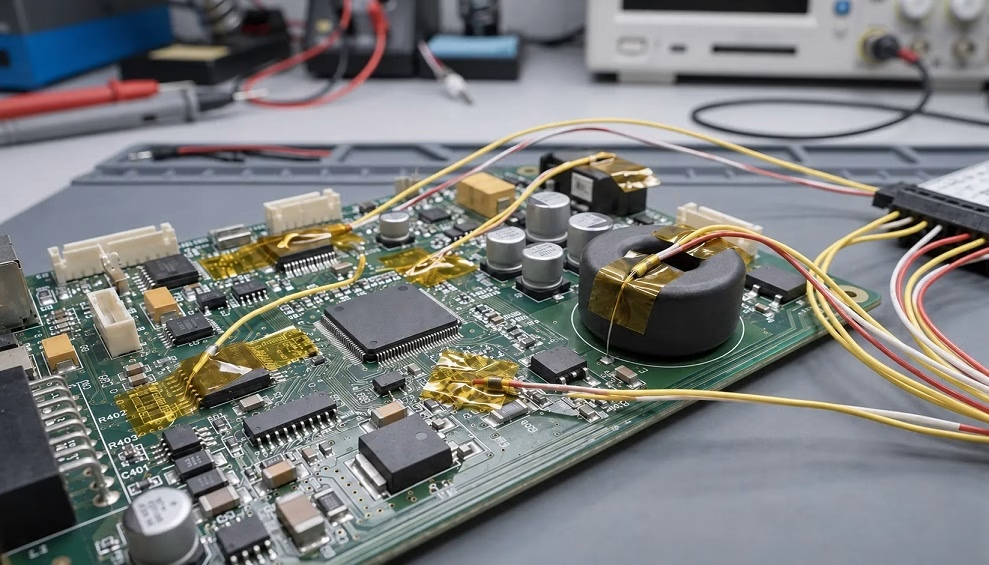
Press the tape edges flat, especially at corners, then check them after heating for lifted edges or flux that crept underneath.
Keep adhesive residue out of the next process
A tape that survives the heat can still leave adhesive behind. Repeated heat cycles, time on the board, surface contamination, and removal temperature can affect adhesive transfer. If you see sticky patches or edge marks under a light held low to the board, record the conditions.
If the board will be coated or bonded, silicone adhesive can leave contamination that interferes with wetting or adhesion even when no sticky film is visible. For a coating-sensitive board, consider a polyimide tape with a non-silicone acrylic adhesive. Acrylic adhesives usually have lower temperature ratings than silicone adhesives, so check that the tape's rated temperature and exposure time cover your reflow peak and dwell before using it on that board. A visibly clean peel is reassuring, but it does not prove that a coating or bond will wet the surface. To decide which adhesive to test, start with a closer comparison of silicone and acrylic adhesive residue, then run a coating or bond trial on a masked board.
On the trial board, look for poor wetting or lifting where the mask ended.
Peel it without lifting anything else
Let the assembly cool. Lift a corner with a nonmetallic tool or fine tweezers without digging into the solder mask. Support the board and fold the tape back close to its surface as you peel. If the tape catches on a small component, stop and change direction.
Peeling polyimide tape from a populated board can generate static. If the board has static-sensitive components, choose ESD-safe (low-static) polyimide tape and peel it slowly. Work at a grounded ESD station and use a grounded wrist strap if you're seated at the bench.
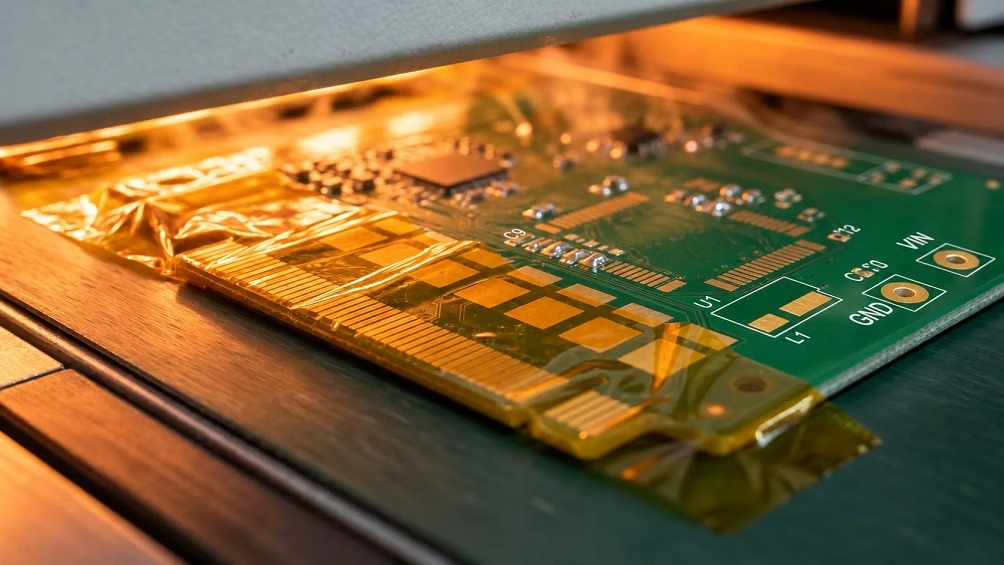
Once the board cools, fold the tape back and peel it away slowly.
If residue remains, identify it as adhesive or flux before choosing a cleaner. Isopropyl alcohol can help with many flux residues, but baked-on adhesive may need a different electronics-safe remover. Spot-test the cleaner for compatibility and lift the dissolved residue away from the contacts. Check for lifted pads, damaged solder mask, and displaced parts.
When you peel a liquid mask, an undercured or thin bead may tear. Lift the film carefully and check both sides of each covered through-hole for fragments.
Masking materials at a glance
Match the mask to the heat it will actually see.
| Material | Reflow soldering | Hot-air rework | Hand soldering | Notes |
|---|---|---|---|---|
| Polyimide tape, including pre-cut dots | Use a grade listed for reflow. | Mask outside the main heating zone. | Mask contacts away from the iron. | Check the backing and adhesive against the heat cycle. |
| PET tape with silicone adhesive | Not suitable. | Low-heat areas only, away from the main heating zone. | Low-heat areas only, away from the iron. | Try it on a scrap board first. |
| Peelable liquid mask | Only if listed for reflow. | Only if listed for hot-air rework. | Only if listed for hand soldering. | Check the cure instructions. Extended reflow can embrittle some grades. |
| Paper tape | Only if the datasheet lists reflow. | Only if the datasheet lists hot-air rework. | Only if the datasheet lists hand soldering. | A rating for bake cycles isn't enough on its own. |
Author bio
Jeremy Lin is a materials engineer at River Tape. He has worked on adhesive tape materials and their use in applications such as high-temperature masking at River Tape for ten years. His work focuses on how tapes behave during application and removal under different process conditions. More at rivertape.com.
References
- Adam Gaynor and Bob Wettermann, “Shielding Effectiveness of Polyimide Tape during Rework,” Circuits Assembly, 2014. https://www.circuitsassembly.com/ca/editorial/menu-features/24290-rework-1410.html
- Bob Wettermann, “Debunking the Myth: Polyimide Tape is Not the Only Answer During Rework,” SMT Magazine, April 2015, pp. 66–72. https://www.magazines007.com/pdf/SMT-Apr2015.pdf
- Circuitnet Expert Panel, “Shielding Techniques When Removing Components Using Hot Air,” Circuitnet, originally posted 2025, updated 2026. https://www.circuitnet.com/experts/89242.html
- Chemtronics, “Conformal Coating Defects: When Things Go Horribly Wrong,” technical article, accessed 2026. https://www.chemtronics.com/conformal-coating-defects-when-things-go-horribly-wrong
- Chemtronics, “Is There a Good Way to Remove Labels and Sticky Residues?” technical article, accessed 2026. https://www.chemtronics.com/is-there-a-good-way-to-remove-labels-and-sticky-residues