June 12, 2018
Raspberry Pi Tutorial
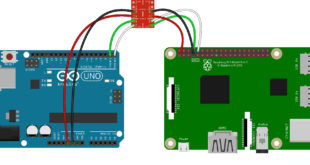
The serial port is a common way to “talk” to devices and is a feature that most microcontrollers and computers have. This Raspberry Pi Serial tutorial teaches you how to utilize the board’s UART feature in order to connect to a PC or to other microcontrollers and peripherals.
Read More »
June 6, 2018
Raspberry Pi Tutorial
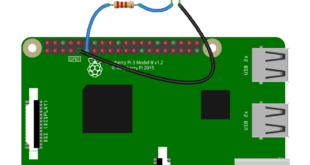
For the next part of the series on Raspberry Pi, I will show how to produce a PWM signal from a pin. Moreover, I will show you how to control single and multiple servo motors in this Raspberry Pi PWM tutorial.
Read More »
June 5, 2018
Raspberry Pi Tutorial
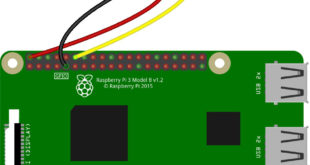
The Raspberry Pi is a Linux computer. But unlike most desktop and laptop Linux computers, users have access to a row of pins that can be used as inputs or outputs. These 40 pins are called GPIO (General Purpose Input Output) pins. This Raspberry Pi GPIO tutorial aims to help …
Read More »
May 30, 2018
Arduino Tutorial
A RGB LED is a special light-emitting diode that can produce 16 million possible colors, all by combining the colors red, green, and blue in varying intensities. This tutorial will show you how to use a RGB LED with Arduino. Introduction to RGB LEDs RGB LEDs typically have four pins …
Read More »
May 29, 2018
Arduino Tutorial, Sensor Tutorial
Turbidity refers to the haziness of a fluid caused by the increased number of very tiny particles which, individually, is invisible to us. Moreover, turbidity measurement is important in testing the quality of water. This Arduino turbidity sensor tutorial provides a guide on how to implement this setup using a …
Read More »
May 28, 2018
Arduino Tutorial, Sensor Tutorial
How can an Arduino detect sound? The simplest way is to use a microphone module, often sold as an Arduino sound sensor. These small boards usually include an electret microphone, a few support components, and an amplifier circuit that turns sound vibrations into a voltage the Arduino can read. In …
Read More »
May 24, 2018
Product Reviews
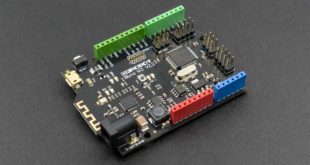
Last time I featured DFRobot’s Bluno M0, an Arduino-compatible board with embedded Bluetooth chip. Now, I will write about the Bluno M3, an STM32-powered board that strikingly looks similar to the M0. Is it the same board or does it offer more?
Read More »
May 22, 2018
Arduino Tutorial
The classic parallel LCD sometimes poses a problem for projects that use a lot of Arduino pins. The least amount of pins you can use is six, excluding the power pins and the potentiometer contrast adjust (optional) pin. Thankfully, by using an I2C LCD "backpack", the pin use can be …
Read More »
May 15, 2018
Arduino Projects
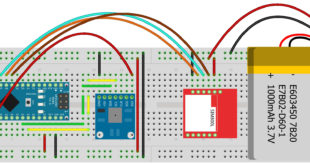
This project demonstrates how to send data to ThingSpeak using a SIM800L breakout board. The data will be coming from a BMP085 atmospheric pressure sensor and will be using the SIM800L GPRS connection to publish this data to ThingSpeak.
Read More »
May 12, 2018
Arduino Projects
I made this project because it seems a lot of people are having trouble with interfacing the SIM800L with an Arduino, particularly in connecting to a network. Here, I made a simple setup where I was able to display the signal level and the network status on an LCD. This …
Read More »