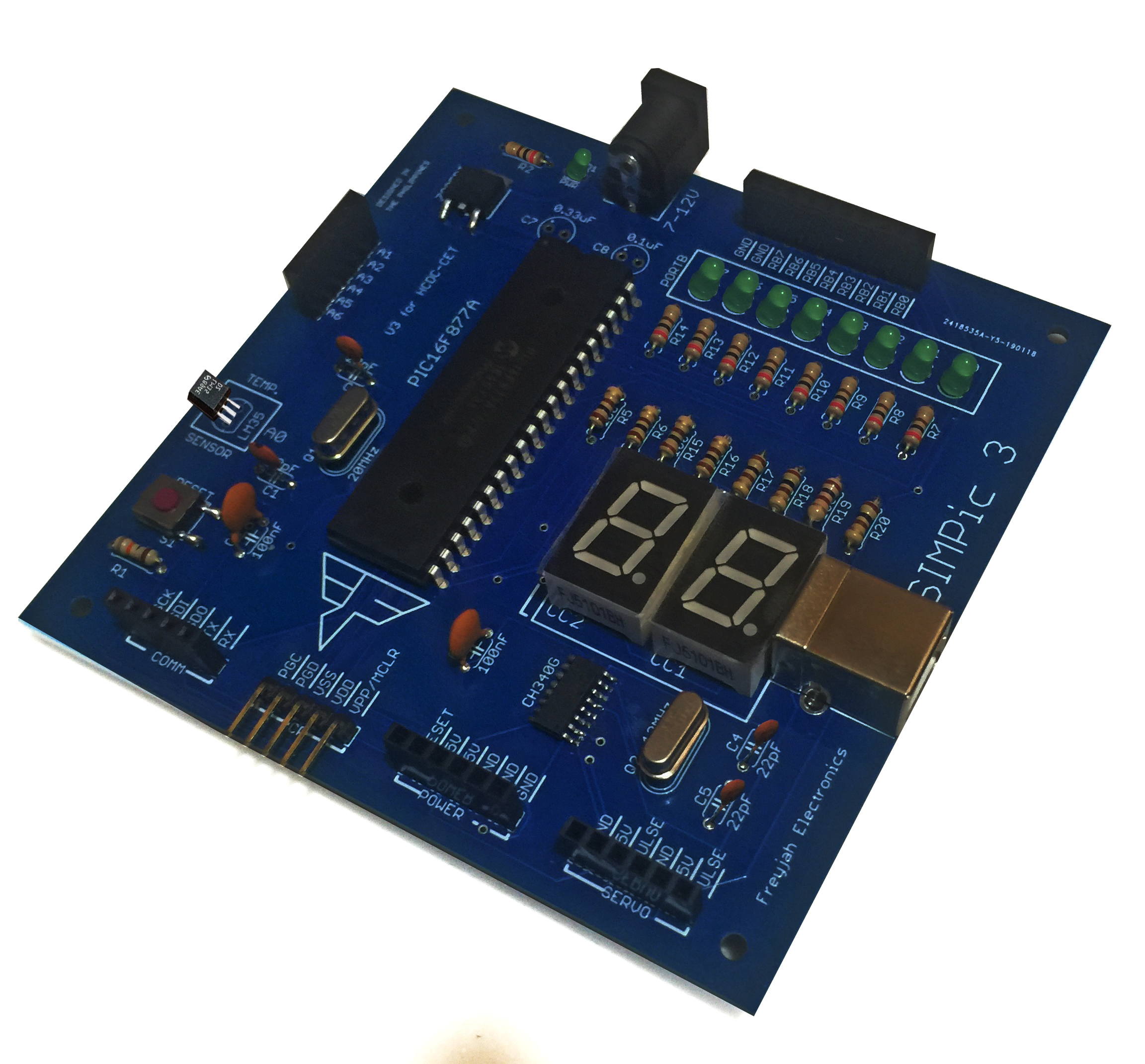
As someone who spends most of his time tinkering with microcontrollers, debugging circuit boards, and teaching others how electronics work, I’ve always been fascinated by the overlap between theory and real-world application. It’s one thing to design an embedded system in simulation or build a prototype on a breadboard, but it’s another to see how those same principles quietly power the machines we rely on every day — like refrigerators.
I had this realization not long ago when my own fridge suddenly stopped cooling. At first, I thought it was just a minor temperature sensor issue, but when I opened it up (yes, curiosity always wins), I realized how much engineering brilliance goes into what most people consider a simple home appliance. The control board alone had more logic than some of the projects I feature here. That moment sent me down a rabbit hole — learning about how modern refrigerator systems are controlled, diagnosed, and repaired.
While reading up on best practices and even consulting some repair technicians online, I stumbled upon companies that specialize in this kind of technical service, like this one offering refrigerator repair in San Francisco. What caught my attention wasn’t just the service itself but how much it parallels what we do as electronics enthusiasts — systematic troubleshooting, diagnostic precision, and understanding component-level behavior under stress.
The Microcontroller Inside the Fridge
A refrigerator may not look like an embedded system project at first glance, but that’s exactly what it is. Behind the plastic and insulation are sensors for temperature and humidity, actuators for compressors and fans, and a microcontroller that keeps everything running smoothly. There’s firmware inside — logic that determines when to activate the compressor, how long defrost cycles last, and how to handle fault conditions.
As someone who’s written thousands of lines of C for STM32 and AVR chips, I can almost imagine the pseudocode behind these routines. Something like:
if(temperature > threshold_high) {
    activate_compressor();
}
else if (temperature < threshold_low) {
    deactivate_compressor();
}
Simple? Sure — but multiply that by the number of variables a fridge actually monitors (door sensors, evaporator coils, ice makers, load currents), and suddenly it becomes a complex real-time control system. It’s essentially an IoT device without the Wi-Fi module.
The Art of Troubleshooting — Across Fields
In both embedded engineering and appliance repair, troubleshooting is the heart of the job. You don’t just replace parts — you diagnose root causes. You listen to symptoms, analyze signals, and form hypotheses. Whether you’re probing a faulty MOSFET on a motor control board or identifying a failing thermistor in a refrigerator, the logic chain is identical.
That’s why I found myself oddly inspired by how professional technicians approach repairs. For example, teams specializing in services like refrigerator repair in San Francisco don’t just “fix” — they systematically test, interpret readings, and apply engineering logic in real-time. In a way, they’re embedded systems engineers — just with compressors and refrigerant lines instead of development kits and logic analyzers.
Sensors, Control Loops, and the Cooling Algorithm
Let’s take a quick technical detour.
A refrigerator’s cooling system is a beautiful closed-loop control system. Here’s the simplified chain:
- Sensor Input: The thermistor reads the internal temperature.
- Signal Processing: The analog voltage (often a few millivolts) is fed into an ADC on the main microcontroller.
- Control Logic: The microcontroller compares the measured value with set thresholds.
- Actuation: The compressor motor is turned on or off through a relay or triac.
- Feedback: The system continuously monitors the temperature, repeating the cycle.
Sound familiar? That’s basically a PID control system, like the one we use in robotics or temperature control projects. The difference is that in a refrigerator, the output variable is cooling efficiency instead of, say, motor speed.
This is why I think appliance repair technicians deserve more credit than they usually get — they’re essentially dealing with real-world applications of the same embedded concepts we study and teach.
When DIY Meets Practical Engineering
I admit — I tried fixing my refrigerator myself before calling a professional. I checked the thermistor, confirmed that the compressor relay was working, and even scoped the control board’s PWM signals. Eventually, I realized the problem was deeper — a failing inverter module. That’s when I understood why appliance repair requires both hands-on skill and deep theoretical knowledge.
Watching the technician work reminded me of debugging an intermittent I2C bus error — methodical, patient, and data-driven. He didn’t just swap parts randomly. He used logic. That kind of systematic approach is exactly what I teach my readers when they’re learning how to debug microcontroller code or trace faulty power rails.
Lessons for Electronics Hobbyists
Here’s the unexpected takeaway: understanding appliances can actually make you a better embedded engineer. Real-world systems like refrigerators are living examples of control theory in action. Studying how they handle things like temperature stability, startup current surges, or sensor redundancy gives you insights into designing robust embedded systems yourself.
So, if you’re into electronics like I am, don’t dismiss household tech as “boring.” Pop open that broken coffee maker or old fridge (safely, of course), trace the circuit, and learn from it. Each appliance is a masterclass in applied embedded systems.
And if you ever find yourself in a situation where you’d rather not risk breaking your food supply — well, professionals who handle refrigerator repair in San Francisco and other major cities have the tools and expertise to take care of that side of the engineering for you.
Final Thoughts
Writing about microcontrollers for TeachMeMicro has always been about one thing: making complex systems understandable. But what I’ve learned through this experience is that those same systems live in our kitchens, garages, and living rooms. The next time you hear your refrigerator’s compressor click on, remember — that’s an embedded controller making real-time decisions based on feedback loops, just like any project on your workbench.
Technology isn’t confined to our labs or code editors. It hums quietly in every appliance around us, blending hardware, firmware, and physics in perfect harmony. And to me, that’s both humbling and inspiring.