September 13, 2018
Arduino Tutorial
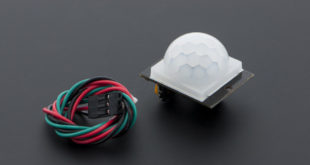
I’ve already covered the basics of how a PIR motion sensor work on my previous tutorial. DFRobot was kind enough to send me a free sample of their PIR motion sensor. So naturally, I got to play with and write about it today. Two of a Kind It turns out, …
Read More »
June 14, 2018
Arduino Tutorial
In my previous Arduino Interrupt tutorial, I showed how to use the external and pin change interrupts for the ATMega328p-based Arduinos. There, I showed an example where pressing a button halts the normal program execution at any time and serves another routine (Interrupt Service Routine or ISR). In this article, …
Read More »
June 13, 2018
Arduino Tutorial
An interrupt, in microcontroller context, is a signal that temporarily stops what the CPU is currently working at. Programming using interrupts is very different from the usual top-to-bottom sequence in an Arduino program and thus can be confusing for some. This article aims to introduce how an interrupt works and …
Read More »
June 12, 2018
Raspberry Pi Tutorial
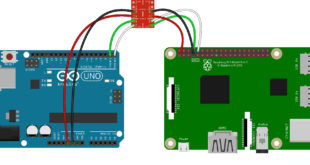
The serial port is a common way to “talk” to devices and is a feature that most microcontrollers and computers have. This Raspberry Pi Serial tutorial teaches you how to utilize the board’s UART feature in order to connect to a PC or to other microcontrollers and peripherals.
Read More »
June 6, 2018
Raspberry Pi Tutorial
For the next part of the series on Raspberry Pi, I will show how to produce a PWM signal from a pin. Moreover, I will show you how to control single and multiple servo motors in this Raspberry Pi PWM tutorial.
Read More »
June 5, 2018
Raspberry Pi Tutorial
The Raspberry Pi is a Linux computer. But unlike most desktop and laptop Linux computers, users have access to a row of pins that can be used as inputs or outputs. These 40 pins are called GPIO (General Purpose Input Output) pins. This Raspberry Pi GPIO tutorial aims to help …
Read More »
May 30, 2018
Arduino Tutorial
A RGB LED is a special light-emitting diode that can produce 16 million possible colors, all by combining the colors red, green, and blue in varying intensities. This tutorial will show you how to use a RGB LED with Arduino. Introduction to RGB LEDs RGB LEDs typically have four pins …
Read More »
May 29, 2018
Arduino Tutorial
Turbidity refers to the haziness of a fluid caused by the increased number of very tiny particles which, individually, is invisible to us. Moreover, turbidity measurement is important in testing the quality of water. This Arduino turbidity sensor tutorial provides a guide on how to implement this setup using a …
Read More »
May 28, 2018
Arduino Tutorial
How can an Arduino capture sound? Just like how your computer captures sound: through a microphone. In this Arduino microphone tutorial, we’ll look at how a sound sensor works. Also, we’ll build a simple clap switch project as an example of how to use a microphone with Arduino.
Read More »
May 24, 2018
Product Reviews
Last time I featured DFRobot’s Bluno M0, an Arduino-compatible board with embedded Bluetooth chip. Now, I will write about the Bluno M3, an STM32-powered board that strikingly looks similar to the M0. Is it the same board or does it offer more?
Read More »