When working with Segger Embedded Studio (SES) and Nordic's nRF52 chips, one of the quickest ways to get started is by using an existing project template. It simplifies project setup, reducing the need for manual configuration, and you can focus on development right away. In this guide, I'll walk you …
Read More »Multitask with ESP32 and FreeRTOS
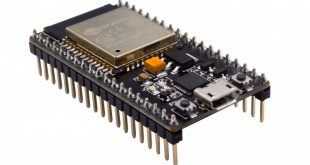
Consider a project requirement, where you have to read from an analog sensor, update a display and flash an LED simultaneously. This might be a challenging coding assignment if you haven’t heard of an RTOS before. RTOS allows you to process multiple “tasks” concurrently. This is in contrast with a …
Read More »Using BLE with ESP32 on the Arduino
The ESP32 microcontroller is a powerful and versatile platform, widely used in IoT applications due to its built-in Wi-Fi and Bluetooth capabilities. One of its standout features is support for Bluetooth Low Energy (BLE), which is an energy-efficient version of Bluetooth designed for IoT devices, wearable tech, smart home gadgets, …
Read More »How to Set Up LwIP Raw on STM32F407
LwIP (Lightweight IP) is a small TCP/IP stack used in embedded systems like STM32. It helps devices communicate over networks using internet protocols. In this post, I will show how to set up LwIP in "raw" mode for an STM32F407 microcontroller. What is LwIP Raw Mode? In raw mode, LwIP …
Read More »Using Flash Data Storage (FDS) in the nRF52832
The nRF52832 is a versatile SoC (System on Chip) from Nordic Semiconductor that supports various features, including Flash Data Storage (FDS) for non-volatile data management. This post gives some basic examples of how to use FDS to save, delete, and update data, as well as how garbage collection works to …
Read More »Implementing PID for a Line Follower Robot
A PID controller is a must-have for any control system aiming for stability. I’ve introduced how to implement PID using an Arduino microcontroller. Now, I’ll be applying PID in the design of a beginner robot project, a line follower. A line follower does what it’s named after. An optical …
Read More »Raspberry Pi Pico L298N Motor Control
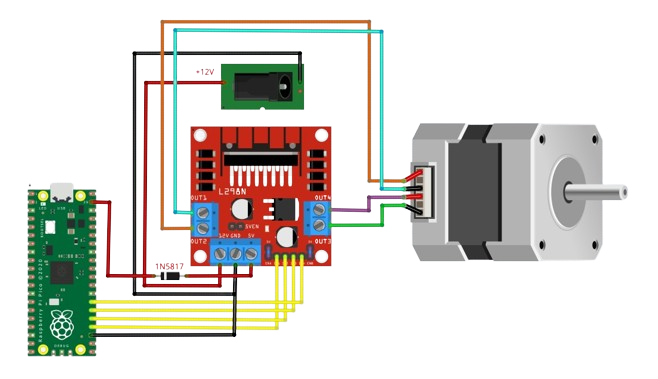
Introduction The Raspberry Pi Pico is a versatile microcontroller from the Raspberry Pi Foundation. It features the RP2040 microcontroller chip, offering dual-core ARM Cortex-M0+ processors and a variety of I/O pins. Its affordability, GPIO flexibility, and programmability make it an excellent choice for various applications, including motor control projects using …
Read More »How to Use a LED Bar Graph with Arduino
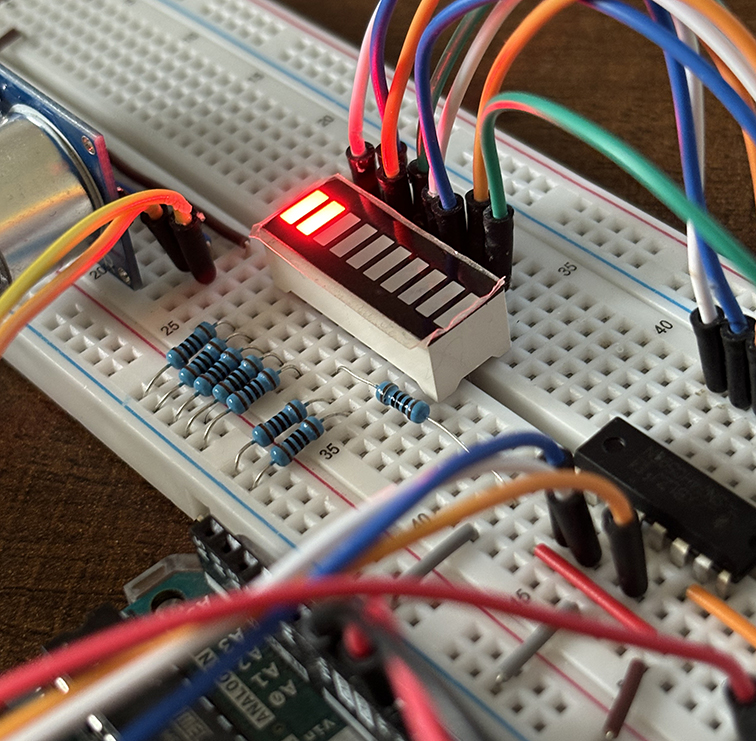
In this tutorial, we will look into adding LED bar graphs to your Arduino projects. Understanding how to effectively use Arduino LED bar graphs opens up possibilities for visualizing data, creating dynamic displays, or simply adding an eye-catching element to your projects. Throughout this guide, I will show you how …
Read More »Interfacing HC-SR04 Ultrasonic Sensor with Raspberry Pi Pico
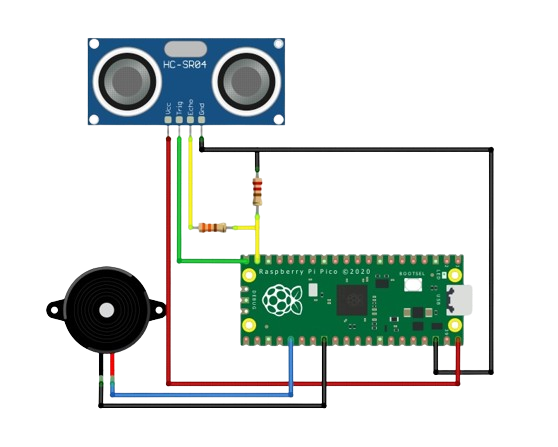
Introduction Beginner tutorials on the web often use the HC-SR04 ultrasonic sensor. Why? Because it’s easy to use and requires a few short lines of code. So when I tried it with the Raspberry Pi Pico, I expected it to work immediately. Until it didn’t. Fortunately, I made it to …
Read More »ESP32 Pressure Sensor
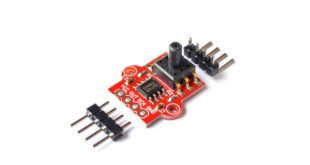
In this tutorial, we will feature the MPS20N0040D and how to use it with the ESP32 microcontroller. It's challenging to directly interface this pressure sensor with the ESP32 but thankfully, we have a development board that comes with a HX710B analog-to-digital converter.
Read More »