Home / Roland Pelayo (page 28)

Roland Pelayo

I started TMM back in 2015. I’m a firmware and embedded systems engineer with over ten years of experience designing and developing electronic and microcontroller-based products. Over the years, I’ve worked on a wide range of projects, including medical devices, access control and security systems, automation, robotics, wireless communication modules, IoT systems, imaging and sensor instruments, and educational training tools. I’ve built systems using platforms such as PIC, AVR, ESP32, STM32, nRF52, and Raspberry Pi, and I regularly work with protocols like RS485/OSDP, CAN, TCP/IP, Wiegand, and a variety of sensor and communication interfaces. I also develop full-stack solutions for embedded projects, combining firmware, hardware, and web-based dashboards when needed. If there’s a topic you’d like me to write about, or if you need consultation or hands-on development for electronics, embedded, or firmware projects, I’m always open to working on new ideas and collaborations. You can reach me anytime through the contact page.

The Ultimate Guide to Wireless Network Adapters

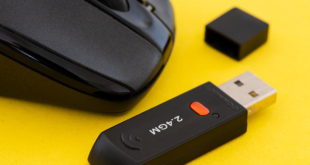
A wireless network adapter is a small piece of hardware that allows you to connect your computer to a wireless network. They're an important part of a computer's internal hardware but can also be hard to understand. This guide will show you what they are, how they work, and what …

Read More »

STM32F1 Serial Port and printf()

STM32F1 serial output

Needless to say, a serial output is a necessary tool in debugging embedded system applications. Placing the right messages in the right place will help you save hours in figuring out what went wrong in your code. Arduino programmers are very familiar with Serial. print() and its derivatives. But how can …

Read More »

Designing a PCB for the RP2040 Microcontroller

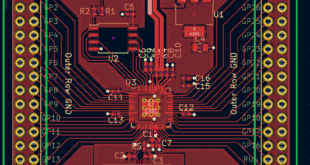
Using the Raspberry Pi Pico is convenient, but as you level up your project, you’ll find that it is much better to create your own PCB that satisfies your design requirements. If you have designed PCB boards for STM32 microcontrollers before, then you’ll find that it is not much different …

Read More »

Using Rotary Encoders with Arduino

incremental rotary encoder

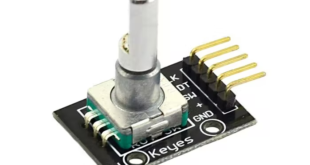
There exists a sensor for almost all physical parameters. Temperature? Pressure? Weight? Gas Concentration? We’ve written a tutorial for them all on this site. This time, we will try to build a device that measures rotational position. The same device can measure rotational speed too. Of course, we’re talking about the …

Read More »

Raspberry Pi Pico Pinout

Raspberry Pi Pico Pinout

The Raspberry Pi Pico is a microcontroller development board built by the same makers of the Raspberry Pi. As seen in the Raspberry Pi Pico pinout diagram below, it has 40 GPIO pins with 3 analog inputs. It features the RP2040, a 32-bit dual ARM cortex M0+ microcontroller chip with …

Read More »

Using an E-ink Display with Arduino

e-ink display front

Ever wondered why e-book readers don't use LCDs, OLEDs, or TFT displays? This is because, with the same usage, e-paper or e-ink displays consume 0.008% power compared to a TFT display. In this article, I'll be featuring an e-ink display that can be readily used with Arduino and other microcontrollers.

Read More »

Get Any Reddit Post using ESP32

Reddit's API has been piquing my curiosity for some time. However, my past experiences with APIs, especially with Twitter and Facebook have left a bad taste in my mouth. Then one day I had the courage to try it again using ESP32 and to my surprise, it's far easier than …

Read More »

Working with ESP32, GPS and Google Maps

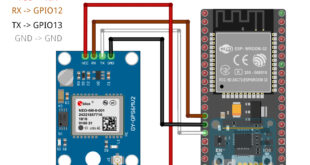
ESP32 NEO6M-GPS wiring

When working with IoT, it’s often necessary to track a device’s location for monitoring. Global Positioning Service (GPS) remains the number 1 option for large-area tracking. This project will show you how you can use a GPS with an ESP32 and have the location plotted on Google Maps.

Read More »