April 18, 2018
Raspberry Pi Tutorial
Using RFID cards and tags is a cool way to switch on anything, wirelessly. For example, you can create an e-lock for your room, check meeting attendance or use cards to control your robot. In this tutorial, we will add RFID functions to a Raspberry Pi Zero.
Read More »
April 15, 2018
Arduino Tutorial
Vibrations can be an indicator that trouble is coming. It can be your machine going haywire, a gear on a robot missing teeth, or worse, a looming earthquake! In this vibration sensor tutorial, we will look at how to detect vibrations using specially designed sensors and an Arduino microcontroller.
Read More »
April 11, 2018
PIC Tutorial
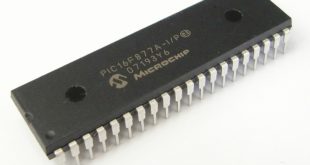
We have managed to blink an LED and use interrupts and timers with the PIC16F84A. Sadly, that’s almost all we can do with that microcontroller as it lacks features that most microcontrollers or Arduino have. From here on, we will now be using the PIC16F877A.
Read More »
April 6, 2018
Arduino Tutorial
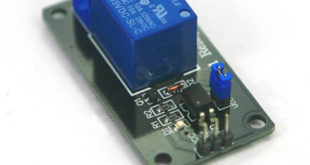
A relay is commonly used to interface a low-current circuit to a higher-current circuit. As such, it’s very useful in controlling appliances and other mains-powered devices using microcontrollers. In this Arduino relay tutorial, I will show you how to use a relay with microcontrollers.
Read More »
April 5, 2018
Arduino Tutorial
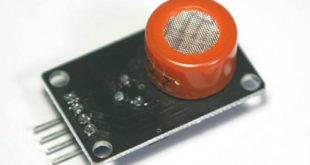
The MQ-7 carbon monoxide gas sensor is especially designed to be sensitive to carbon monoxide (CO) gas which is emitted by vehicles, factories, etc. Since this gas is considered toxic to humans at certain levels, the concentration of CO is used to determine the air pollution in a given area.
Read More »
April 4, 2018
Arduino Tutorial
A fire or flame sensor is simply an infrared LED with an amplifier circuit. Flame radiates an infrared signal, which triggers the LED to produce current. This current is converted to voltage for an analog-to-digital converter to read. Let's see how we can build an Arduino fire detector using this …
Read More »
April 2, 2018
Raspberry Pi Tutorial
The Raspberry Pi Zero W comes with both WiFi and Bluetooth connectivity. I have already covered how to turn on WiFi on my previous tutorial. Now, let’s look at how to set up a Raspberry Pi Zero bluetooth connection without a GUI.
Read More »
April 1, 2018
Arduino Tutorial, PIC Tutorial
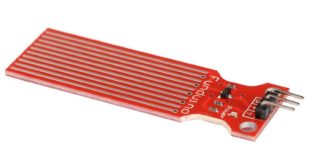
A water level sensor is a simple device used to measure the level and volume of water inside a container. This tutorial shows you how to use a water level sensor with microcontrollers like an Arduino or PIC.
Read More »
April 1, 2018
Arduino Tutorial
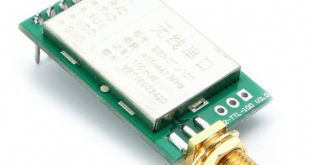
LoRa is a promising low-power, long-range wireless transmission protocol developed by Semtech as part of the emergence of the Internet of Things (IoT). Simply put, it is a method for sending data separate from WiFi, Zigbee, or Bluetooth. Its low power consumption amidst a very long range of transmission (up …
Read More »
March 31, 2018
Arduino Tutorial
The number of Arduino boards have increased over the years; some have been discontinued while others are still available. The choice of which board to use depends on several factors: price, features, availability, ease of use, etc. Here’s a summary of all Arduino boards with their pros and cons.
Read More »