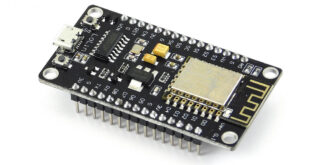
SPIFFS or Serial Peripheral Interface Flash File System is a system that utilizes extra flash memory on the ESP8266 and ESP32 for storing files. It’s so named because the user reads, writes or deletes files in the memory using the serial interface. In this article, I will show you how …
Read More »How to Use MQ-4 Methane Gas Sensor
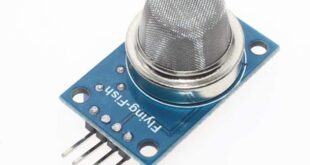
The MQ-4 is one of many gas sensors ready to be interfaced with microcontrollers. Just like the rest of the MQ sensors, the MQ-4 is most sensitive to a particular gas. This time, it’s methane, although the sensor can still detect other flammable gases like butane and propane.
Read More »Using the BH1750 (GY-30) Sensor with Arduino
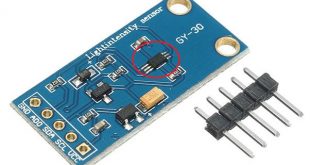
The BH1750 is a light-intensity sensor that interfaces with a microcontroller through the I2C bus. It can directly provide lux values without further processing, unlike CdS cells or photodiodes.
Read More »Using AD9833 Signal Generator with Arduino
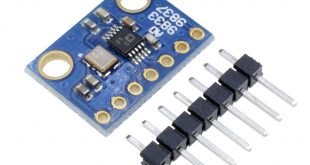
How can you create sine, square or triangular waves with Arduino? Apparently, there’s a way with the help of an IC package -- the AD9833. With it, you can now create waveforms for communications, instrumentation, or other similar projects. My tutorial on building your own Arduino AD9833 signal generator after …
Read More »How to Use I2C Devices with Raspberry Pi
I2C is a popular device protocol in communicating with microcontrollers. However, this protocol is not limited to Arduino, PIC and STM32; the Raspberry Pi can also use I2C.
Read More »Watchdog Timer on Arduino Tutorial
In Arduino programming, we learn about functions setup() and loop(). Any code inside setup() executes once while code inside loop() executes again and again until the next reset. Now what if while inside the loop(), something went wrong either in code or in hardware? Normally we just press the reset …
Read More »Dot Matrix Droplets Project
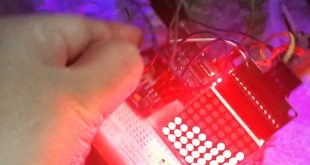
This project makes the “dots” on a dot matrix look like they are pebbles in a container. Tilt the device on one side and the dots fall toward that side. The same goes if the device tilts to the other side.
Read More »How to Use TM1637 and Four Seven Segment Display Module
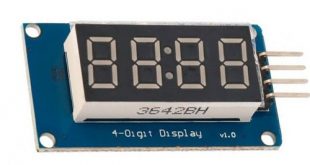
A seven segment display has one pin for each of its seven segments. This means if directly interfaced with a microcontroller, you will need at least seven pins. Fortunately, there is a way to use four seven segment displays and using only four pins from your Arduino.
Read More »How to Use Load Cell with HX711 and Arduino
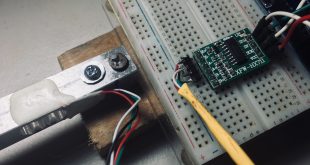
Measuring an object’s weight can sometimes be part of a bigger project. And unless you have a good reason, you wouldn’t want to use an analog weighing scale. A digital weight sensor is easier to interface with, not to mention its accuracy and durability against an analog weight sensor. In …
Read More »ESP32 MAX7219 WiFi Message Board
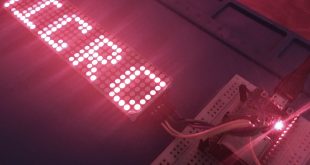
This ESP32-powered project allows you to write messages to a MAX7219 LED matrix display using your smartphone. Scaled up, this can be used as a WiFi message board for schools or signages for businesses.
Read More »