November 13, 2017
Arduino Tutorial
Wireless control is much more convenient, especially at a significant distance. Imagine having wires from your controller to your robot! Also, making your project portable is essentially saying making it wireless (unless you still need to plug it on mains). In this tutorial, we’ll look at popular methods for achieving …
Read More »
November 3, 2017
Arduino Tutorial
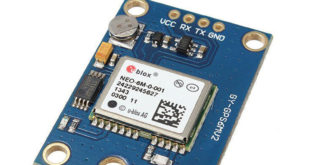
Global Positioning System (GPS) has been around since the 80's and is still one of the most important features you can add to any electronic system. The idea of tracking something (or someone) is cool enough but doing so without a telephone or an internet connection is much cooler. In …
Read More »
November 1, 2017
Arduino Tutorial
If somehow a 16x2 LCD or a Nokia 3310/5110 LCD is too large for your project, then there's a 0.96" display you can add to your arsenal. This display is OLED (organic LED) instead of LCD - which means the backlight is unnecessary. In this tutorial, we will look at …
Read More »
October 16, 2017
PIC Tutorial
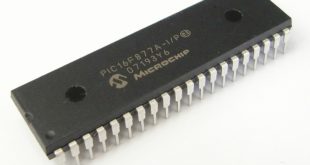
Pulse width modulation may have been invented to encode messages into pulsing signal but it was originally conceived as a technique for controlling power supplied to motors. In this tutorial, we will look at how PIC16 PWM works.
Read More »
October 13, 2017
PIC Tutorial
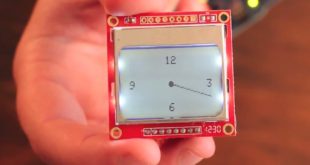
In this post, I’ll share with you how I got the Nokia 3310 LCD to run using a PIC16F877A microcontroller. How to use the Nokia 3310 LCD with the Arduino has been covered before. This one is more challenging because I had to create a library for the XC8 compiler. …
Read More »
October 11, 2017
Arduino Tutorial
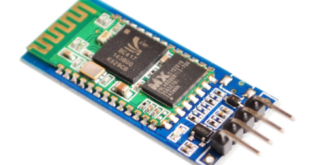
Bluetooth is the most popular way of connecting an Arduino to a smartphone wirelessly. In this tutorial, we will create an Arduino-bluetooth interface and send messages from an Arduino to a smartphone and Arduino to a personal computer.
Read More »
October 6, 2017
ESP8266 Tutorial
So far, we've been using HTTP in our NodeMCU web servers and while it works, the protocol is not really the best way for sending and receiving small-sized data for IoT applications. In this tutorial, I will introduce you to MQTT using ESP8266.
Read More »
October 4, 2017
ESP8266 Tutorial
Last time we managed to display sensor data to a NodeMCU web server. The problem with that code is that we need to refresh the page manually in order to update the sensor value. A better method is to use Ajax (asynchronous javascript and XML) so that we can request …
Read More »
September 19, 2017
BeagleBone Tutorial
Using the Beaglebone Black's PWM Bonescript also includes an analogWrite function which utilizes the 8 PWM pins of the Beaglebone Black. As you might already know, PWM allows us to control a servo motor. The analogWrite function accepts the pin name, duty cycle, frequency, and callback function as parameters. The …
Read More »
September 19, 2017
BeagleBone Tutorial
Using the Beaglebone Black ADC One of the advantages of the Beaglebone Black over the Raspberry Pi is the presence of an analog-to-digital converter. There are 7 analog inputs, all at P9: To process analog signals, we’ll be using the analogRead() function. Note that the analog pins can only read …
Read More »