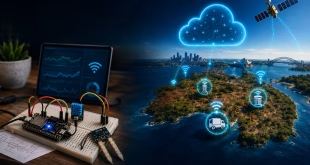
Building an Internet of Things project from scratch is a highly rewarding technical challenge. For many hobbyists and developers, the journey begins on a workbench with a simple Arduino, NodeMCU, or ESP32 board wired into a breadboard. Seeing raw sensor data appear on your screen validates hours of hard work …
Read More »Adding an External Antenna to ESP32: U.FL, PCB Modifications, and Placement
Adding an antenna to ESP32 can improve Wi-Fi and Bluetooth reliability when the board is installed far from an access point, placed inside an enclosure, or surrounded by components that interfere with its built-in PCB antenna. However, the modification involves more than soldering a piece of wire to the board. …
Read More »ESP32-S3 Analog Input Leakage Current: High-Impedance ADC Design
The ESP32-S3 analog-to-digital converter works well with low-impedance voltage sources. However, problems can appear when the analog signal comes from a high-value resistor divider, a resistive sensor, or another circuit that cannot supply much current. You may notice that the measured voltage is lower than expected, the first reading is …
Read More »The Tech Founder's Guide to Automating Paid Search with APIs and Web Scraping
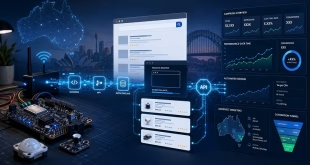
Tech founders who build custom electronics, IoT projects, and hardware startups often hit a wall when it comes to customer acquisition. Engineering a brilliant product is only half the battle. Scaling market visibility requires a completely different type of architecture, but it is one that modern developers are uniquely equipped …
Read More »Introducing the PIC16F84A Instruction Trace Tool
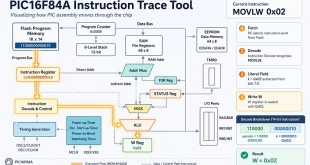
Learning PIC assembly is easier when you can see what happens inside the microcontroller. The problem is that most tutorials show the instruction, the result, and maybe the affected register, but not the path the instruction takes inside the chip. That is what the new PIC16F84A Instruction Trace tool in PICSimulator.com …
Read More »How AI-Powered Engagement Tools Are Automating Digital Visibility for Tech Brands
Artificial intelligence engagement software transforms corporate visibility by streamlining search performance, automated interaction, and prospective buyer acquisition. Technology firms utilize next-generation algorithmic architecture to maintain prominence inside modern search layouts, where automated summaries frequently displace traditional website links. Through real-time user behavioral analysis, automated platforms continuously adjust digital touchpoints to …
Read More »Linked List Visualizer for Embedded Systems
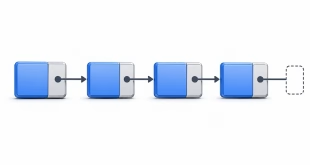
A linked list in embedded systems is a collection of data elements connected using pointers. Unlike an array, the elements do not need to occupy consecutive locations in memory. Each element stores its own data and a pointer that identifies the next element in the list. Linked lists are common …
Read More »Ring Buffer Visualizer for Embedded Systems
A ring buffer in embedded systems is a fixed-size memory area used to temporarily store data. You will often find one between a fast peripheral and a slower part of the program. A UART interrupt, for example, can place received bytes into a ring buffer while the main application processes …
Read More »How to Power an ESP32-S3 with AA Batteries
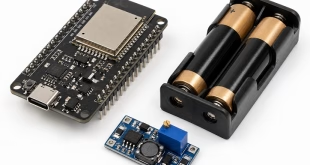
The ESP32-S3 is commonly powered through its USB port while programming and testing. However, USB power is not always practical for projects installed outdoors, mounted on walls, or placed far from an electrical outlet. In this tutorial, we will build an ESP32-S3 AA battery power supply using two AA cells …
Read More »PCB Material Types and Selection: A Practical Guide for Design
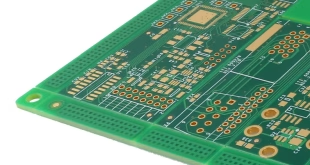
If you've ever designed a board only to find it failing after a few thermal cycles, you already know the pain. The PCB material you choose determines everything—signal integrity, mechanical reliability, thermal performance, and ultimately whether your product survives in the field or ends up on a rework bench. Choosing …
Read More »